Can You Grow an HVAC Company Without Upselling? Jason Neal Did
You got into HVAC to fix things. Now plenty of companies pay their technicians to sell instead, and homeowners have learned to brace for a replacement quote every time a truck pulls up. The question is whether honest work can pay the bills while word gets around.
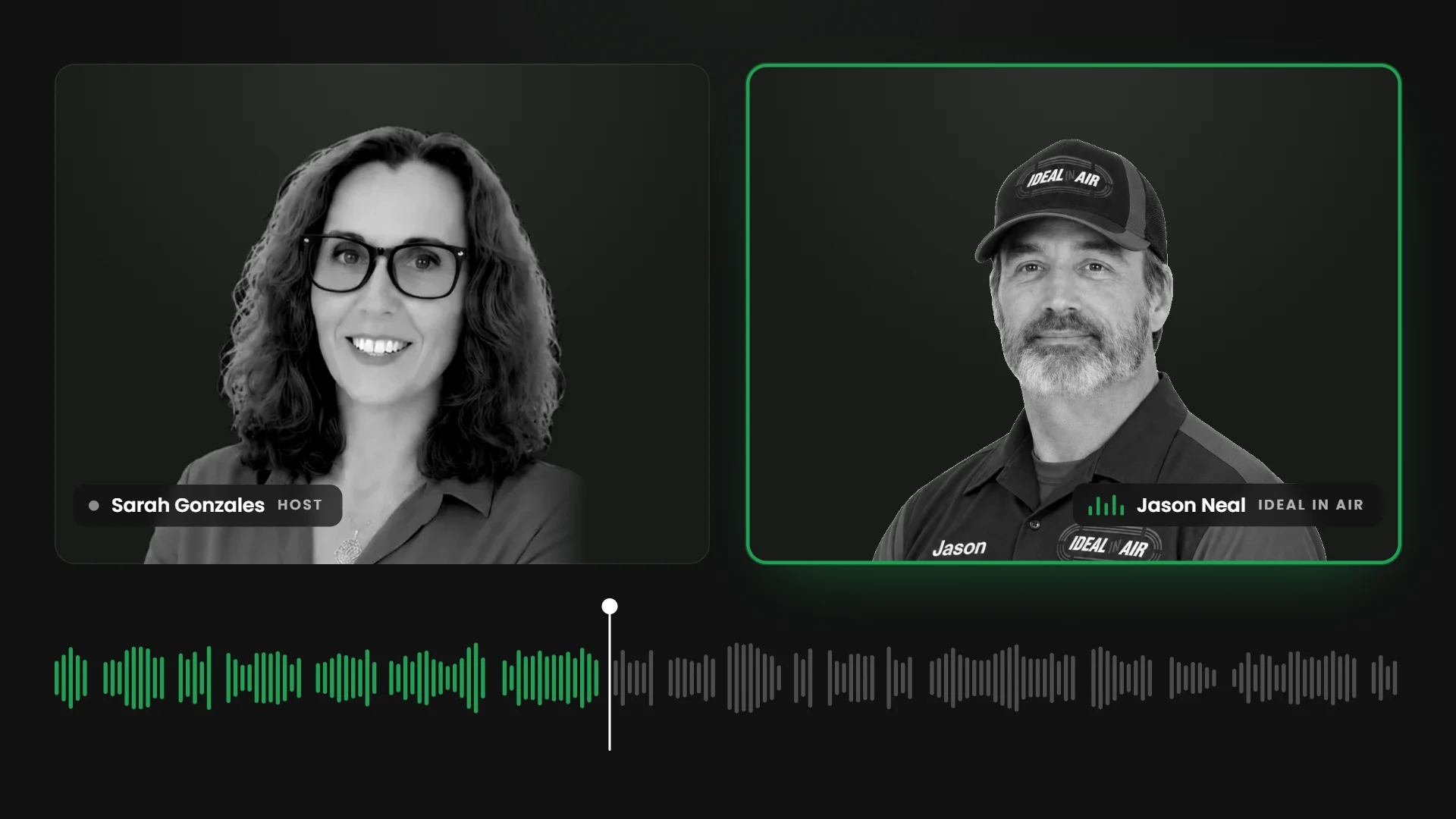
Jason Neal says it can, and he has 37 years in the trade behind that answer. On this episode of Out of the Truck, Sarah Gonzales sits down with the co-owner of Ideal In Air in Southlake, Texas. They talk about honest diagnostics, the book Jason wrote so new technicians can get them right, and the retiring owner who sold him a 30-year customer base for half of what another buyer offered.
 Ideal In Air
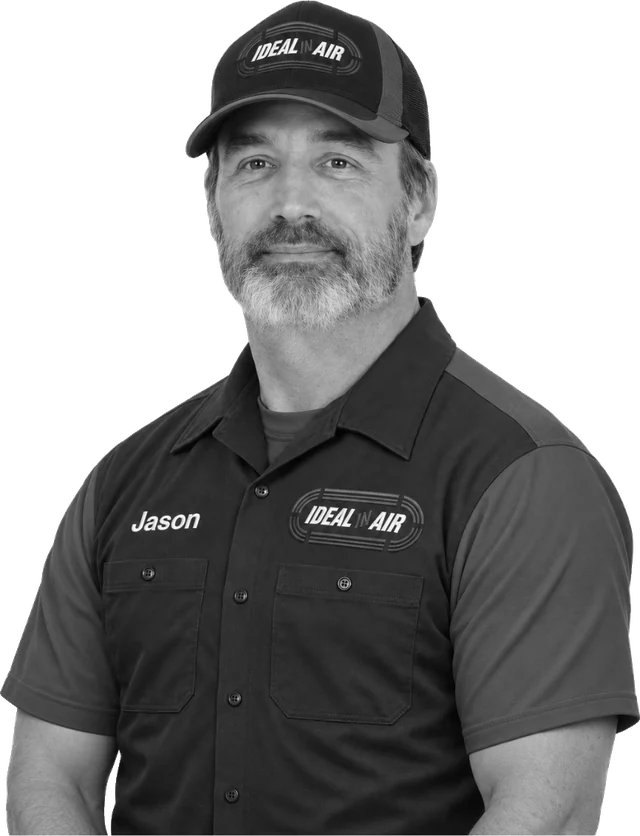
About the guest. Jason Neal is co-owner and vice president of Ideal In Air, the family-owned HVAC company in Southlake, Texas, that he runs with his brother Brian Neal, the company’s president. His father started in air conditioning in Fort Worth in 1961. Jason wrote Air Conditioning Book of Secrets: Deep Dive Diagnostics & Troubleshooting and is turning it into a website and app he’s making free to any technician who wants them.
What You’ll Learn in This Episode
- 01Why “sales technicians” exist. How commission, low hourly pay, and minimum ticket targets push techs to sell.
- 02The question to ask before you book. Does the technician earn commission on repairs?
- 03Why a hard start kit isn’t the safe add-on it’s sold as, on a compressor that starts fine.
- 04How to read a system by temperature, not pressure, and why the R-22 to R-410A switch never worried him.
- 05How to train a new technician in two years instead of ten, with his son as the test case.
- 06How two brothers started with zero customers and kept the lights on by subcontracting installs.
- 07Why a retiring owner turned down twice the money to protect his 30-year customers.
Why Do HVAC Companies Turn Technicians Into Salespeople?
HVAC companies mostly turn technicians into salespeople because of supplier pricing. The trade calls selling systems moving boxes, and the more boxes a company moves, the better the price it gets. Jason calls them sales technicians, salesmen dressed as techs.
The other part is pay. When a company pays commission on repairs, Jason says it usually pairs it with a low hourly rate, so a technician has to sell to feed their family. Some companies set a $1,600 minimum per ticket and send a tech to one or two calls a day to find it.
Jason’s average ticket sits around $700 to $800, and a lot of his tickets are $99. The worst case he’s seen was a homeowner told to replace the system in a one-year-old house, still under warranty.
He learned the alternative from his own mechanic of 30 years. Jason once asked why that shop never padded his bill when every other shop in town seemed to. The mechanic pointed at a full parking lot and told him, “I ain’t got time to rip people off.”
Does a Hard Start Kit Help or Hurt an AC Compressor?
On a compressor that starts fine, Jason says a hard start kit hurts. A hard start kit runs a homeowner four or five hundred dollars and gets sold as protection for the start windings. Jason points to Copeland’s own guidance that the scroll compressors in most residential systems start unloaded and shouldn’t get one.
Added to a healthy compressor, he says, it puts more strain on the start windings and shortens the compressor’s life. The one time it earns its place is on a compressor that’s already failing to start. There, it can buy the homeowner a year or two to save for a replacement.
Most homeowners can’t tell the difference, which is why Jason says they’re defenseless against the pitch. Ideal In Air offers free second opinions for that reason. One homeowner was told by a company she’d used for years that her system was finished, needed a $600 repair, and the unit is still running a year later.
The readings, charts, and diagnostics Jason spent 37 years collecting, in one book.
Get the Book of Secrets on AmazonHow Do You Train a New HVAC Technician to Diagnose Like a Senior Tech?
When Jason was learning, experienced techs kept what they knew to themselves, and some of what they did share was wrong. He wrote his book so new techs don’t have to learn that way.
The biggest lesson in it is to check the refrigerant charge by temperature, not pressure. That’s why the move from R-22 to R-410A never worried him. The pressures changed, but the temperatures didn’t.
His son proved it works. After a two-week course and a month riding along, he went out on his own with the book in his truck. Two years in, he’s where it took Jason ten years to get.
The website version already goes further than the original book:
- Duct airflow. Enter the supply duct sizes and type, metal or flex, and it totals the CFM so you can check the ductwork against the unit size.
- Room air changes. Short of a full heat load, it works out the air changes each room needs.
- Manuals in the field. Enter a model number and it searches the manufacturer’s site first, then the rest of the web.
That matters to an owner as much as to a technician. As Sarah puts it, growing means finding people who aren’t you who can do at least 80 percent of the job as well as you can. A tech who enters their readings gets a diagnosis, or a list of what to check before calling the service manager.
Why Would a Retiring HVAC Owner Sell His Company for Half the Price?
Jason and Brian quit their jobs without a single customer, and spent the first week in Brian’s garage wondering how to make the phone ring.
That Friday, they went to the supply houses and offered to subcontract installs. One taker was Steve, an owner with 30 years in the business and health problems. When the brothers had enough work to stop subbing, they kept doing Steve’s installs anyway, because he’d been there for them at the start.
When Steve decided to retire, another company offered him twice what the Neals could pay. Then its people told him they could easily double the income from his customer base, and Steve knew what that would mean for customers who’d trusted him for 30 years. He backed out, sold to the brothers for half the money, and wrote to his customers to introduce them.
Asked how Steve kept customers for three decades, Jason lists honesty, integrity, being personable, getting the diagnosis right, and not ripping people off. In a Dallas-Fort Worth market where some competitors spend $100,000 or more a month on Google Ads, he says the only company he competes with is his own. Stay honest, and the reviews customers leave do the rest, which is why a strong online reputation carries a small HVAC company so far.
You built your company on a standard most of your market won’t hold to. That’s an episode.
Transcript
Hello and welcome to the Out of the Truck Podcast, where we sit down with industry leaders for honest conversations to help you grow your company, lead your team with confidence, and get ahead in a fast changing market. Really excited today to say hello and welcome Jason Neal, Vice President of Ideal In Air in Southlake, Texas. Hi, Jason. Good, good. It’s good to see you this morning. Thanks so much for joining us bright and early.
Always early. And this is what I love about Jason. He’s a fellow early bird. He and I will regularly talk at like five thirty, six AM his time. So I I like I like people who get off to a f fresh start with their day and I think that’s always been a secret to your success.
Just get it done. That that’s always the way with you. So Jason, we have a lot to talk about today. We’re gonna talk about AI. We’re gonna talk about your new book, which is so exciting. We’re gonna talk about the app that you’re creating. But I wanna start with you introducing yourself to the audience a little and telling us about you and about Ideal In Air.
Meet Jason Neal and Ideal In Air
Okay, well, my name’s Jason Neal. I’m vice president of Ideal In Air. We started this business, I think, about five years ago, and I’ve got a 37 years of experience. My brother’s my partner and the president of the company. And he’s got a few more years of experience than I do. You know, our our goal here at Ideal In Air is to give an honest diagnostic. To the best of our ability, an accurate diagnostic and give the customer a solution to their problem that truly addresses and fixes their problem as opposed to just throwing stuff at the wall and seeing what sticks. And that’s kind of why I started with the Excel sheet that turned into a book.
that turned into a website that turned into an app and I’m fixing to take all that and reverse engineer it back into a book again. Is is trying to get something for myself and e you know, my guys. And then I thought, well, why not everybody? You know, so it’s something that I wanna, you know, make free available to anybody who wants it, as far as the website and the app that gives
technicians a way to collect good the correct readings and get good direction and the diagnostic and where they what their next step will be and all that. Because our goal is to bring everybody up. In the industry, not just us, you know, saying saying, you know, see how much better we are. No, we want every technician to be good because we want every homeowner to be taken care of, whether they’re our customer or not. And that’s kind of why I wanted to make this a free resource.
That’s great. And so what Jason’s talking about is his new book and app, which is called the Air Conditioning Book of Secrets, Deep Dive. And it’s about diagnostics and troubleshooting. And we can put that on the screen so people can see.
Cause this is really something, this is next level as far as HVAC contractors. You know, there are people who build a great business, but then to take it to that next level and really share it with other people, I think is great. And Jason, you know, when you and I have talked before this app and this book, they really came from the challenges that you had when you were coming up as a technician many years ago. And So can you talk a little bit about that thread of of how you felt like you always were kind of like learning on the job and having to figure it out and how you feel like this now sort of solves that problem for technicians and for homeowners who are coming up and really struggling with all the different problems that they might have.
When HVAC knowledge was treated as top secret
Yeah, well, you know, when I was first learning service, everybody acted as if though the knowledge was a protected top secret level clearance that I could not have. And I would have to dig and learn and and then you know, certain people would share certain information with you, and you’d then you’d have to figure out whether they’ve given you good information or if they were just You know,
misunderstood themselves and gave you bad information. So that’s that’s kind of what led me down the road of creating all this was that I you know eventually I’d gotten to the right people and and learned. And I I I I don’t want to be that guy that treats it like top secret. I want to be that guy that gives it freely for the next generation of technicians to help them improve their skills.
And this is geared towards new technicians as well as guys with forty years experience. This will benefit every technician out in the field.
Yeah. No, that’s I that’s absolutely great. And you know, one one of the quotes I saw from the book that really stuck out to me is a reading means very little until you know what it actually is and what it should be. And so I think you’ve done a lot of calculations here and you really kind of had to dig into the math of what the heck am I seeing when I get this reading? Can you talk a little bit about that? And this was very much
Charging by temperature, not pressure
Yeah, well, you know, like like I said, back back when I was first learning it it was it was hard to find the information ’cause we didn’t have Google when I started. We did not have AI when I started. You know, it was all finding books or somebody who truly knew what it was about and learning those, you know.
that stuff and and I I remember the day that I learned that your whenever you’re looking at your s your gauges and you’re seeing your pressures on the P on on the on the temperature scales, when I learned that that was all mathematical to be able to figure out where my charge should be, that was a game changer. And
For a long time, you know, no nobody, I don’t know if they didn’t know or if they just didn’t tell me, but I tend to think most of them didn’t know back then. And because everybody would say, Well, you know, s you know, set your pressures to this and you’ll be good. You know, make sure it’s beer can cold. And you know, then I I went to work for a guy doing commercial refrigeration and that’s where I learned that hey, this can be mathematical.
If you if you use your temperature section of your gauge instead of your PSI, it’s mathematical to figure out where it should be. And it’s and also it doesn’t matter, like you know, whenever the industry first went from R22 to 410A, everybody was up in arms about, you know, I have to figure out this new refrigerant, and my god, it’s another refrigerant. Well, by the time the industry made that switch.
I’d done work in commercial refrigeration and worked with 40 different refrigerants. And I understood it’s just another refrigerant. Use your PT your temperature scale or a PT chart. And whether if it if it’s low temp, medium temp, or high temp.
As long as you know what your temperature scale is, it’s mathematical. And the you know, for l lot like high temp, which is air conditioning.
The PSI changes drastically between twenty-two and four ten A. The pressure or I’m sorry, the the the temperature scale though. It’s the same temperatures, just different pressure. So whenever you’re going from one refrigerant to the other, if you’re using your temperature scale, it’s very simply just look at your temperature or or you know, it’s very simple. You’re looking at your temperature scale. Well, if you’re dealing with air conditioning, the temperature scale is gonna be the same. PSI is different. So forget PSI, because it doesn’t really mean anything to me.
Training his son with the book
really interesting. And have you I know your son is working with you now. Has had and and and he’s obviously coming up and and learning the industry. Have you found that he is kind of a good test case as you’ve been refining the app and the book and all your diagnostics to say Yeah. Tell me more about that.
He he was absolutely he was absolutely my test case. My he was absolutely my test case because my son, we sent him to a two week crash course on air conditioning and he took the two week crash course. He he came out of that, rode with me for about a month and he determined he was ready to try to go on his own and he did. And you know, he wasn’t without questions, but you know, he he and but I gave him the the first copies of the book where he had a place that you know he he could you know he could see these are the readings I need to get. And then he had all the the charts and diagrams so he could find out what he should be seeing compared to what he actually got. And
It it has helped him tremendously. You know, like I said, you know, he went to a crash course and he’s now been with us two years and he is probably at the level I was at by ten years. Easily by by having the information given to him that you know I mean th that’s really is having access to the information that I you know what readings do I need to collect what should they be what do they mean and why do they mean it and you know he’s got all that information so even if it’s not burned into his memory yet he’s got that book that he he pulls out and can go to
Yeah. And and this seems to solve such a huge problem that we have in the industry, which is there aren’t enough technicians to satisfy demand. It is so hard as a contractor to find great people who knew what the heck they’re doing and are not that just there to do sales. And so this really to me points to not just a problem about, hey, look, we’re gonna do a great diagnostic, but as a business, how can I even grow? Because I need to find people who aren’t me who can do at least 80% of as good a job as I can and have the tools at their disposal to accelerate that training process.
The website tools: duct CFM, air changes, and manuals
Yep. And d and you know, th like I said, th this is something that’ll be beneficial for whether you’ve got one year of experience to to where you just barely know what a set of gauges are, much less how to use them. And all all the way to I mean, you could be a retired technician and you would still find things in the
book, website or app that are beneficial. You know, it’s I mean the the website goes way beyond what the book the original book did and like see we got where we we got here where we can do our ductulator you know put our tons in and all hang on a second that’s not
section I wanted. Where’d it go? There that’s what I’m looking for. Supply ducts. You can put metal, flex, you know, you put in flex, put the number here, boom, it gives you the CFM you’re gonna the the total CFM that’s gonna move so that you can compare that from duct sizes to unit size and know whether it’s right.
we can do here. It’s just short of being a heat load, but it just calculates the the the air changes you need for a room, what rooms you have, how much air changes you have.
The the thing I I like a lot about this is when you come here and you look for a manual when you need a manual out in the field for whether it’s you know, needing your your blowers ta your blower CFM tables, static pressure, or more information on a particular unit, you put the the unit and the series number or the full model number in, it does not matter.
And you come here and it automatically does your Google search for you. And you can go straight to the manufacturer’s website and go get your documents. And
I think that’s amazing. I think that’s so important. People get so stuck on, you know, every manufacturer has so many different models and then they’re, you know, my gosh, this is a 15-year-old unit. I have no idea how to fix it. I don’t know what the heck.
Yeah, and somebody didn’t leave the book with the unit or the homeowners moved it or throwed it away and you’re constantly needing manuals out in the field when you’re trying to do it right. And you know, not just ballparking it, but
the a a problem I ran into a lot was find you know is being able to do an internet search and find the right manuals and all that. So the way the the website the and the app work is it’s going it it it searches for manufacture first and then it’ll search for a generic you know search like anybody got a PDF of this out there, you know. But it starts by manufacture, you know, OEM it takes precedence and then
the generic search because there’s a lot of generic sites out there that have manuals and they’re they’re the manufacturer’s manuals, but they’re just not the manufacturer’s website. And you know, sometimes you find them on the manufacturer website, sometimes you find them in the general s search. I had one two days ago. I could not find the manual on the manufacturer site. For the model number I was using or or that I had there in front of me. The manufacturer didn’t even have them the books. And I was like, man.
What a better diagnosis means for the homeowner
Well, talk to me about what if I’m a homeowner, if we put ourselves in the position of a homeowner, how much better does it make my experience as the homeowner when I have someone, maybe a young technician who’s armed with all this information coming into my house?
Well, if if th you have a technician that’s armed with this, even if he’s only got a year of experience, if he goes through the the steps of putting all his readings in He’s going to get a diagnostic back or at least point it in a direction that a senior technician would have come to. And so it’s basically like giving him at his fingertips the knowledge and its simplicity that he can use it with one, you know, with minimal experience and come up with the same diagnostic.
that somebody doing it for thirty seven years would come up with. That way, even if he doesn’t fully understand it, he’s got the right answer.
And so that benefits the customer greatly. Because now the customer’s not paying for a repair that that didn’t quite get it. Maybe we throw this at the wall and see if it sticks.
Yeah. Yeah. And do you think it’s also gonna help with the timeline that if I’m a homeowner and my house it’s you know, ninety seven degrees in Dallas and and my house is really, really hot and I don’t wanna have to wait for a few days before they figure out what parts they need and they order it and do I need to fix or replace? Do you feel like this is gonna get me back to being comfortable? Not in all cases, but in some cases gonna get me back to being comfortable faster.
Well yes, because you’re gonna have it correctly diagnosed. And what happens more with technicians that don’t have as much experience, so they don’t have the knowledge to make the correct diagnosis.
They work off of the knowledge they have, and then they make their best guess. And a lot of times that guess is wrong, but you’ve already approved a quote to make a repair. They’ve already made the repair and it didn’t fix the problem. So now they’ve got to come back at you with, okay, now maybe it’s this.
And so the the this won’t eliminate that completely, but it it’ll lessen the odds of that happening because they’ll they’ll either have a correct diagnosis or if if the diagnostic isn’t something that it can pinpoint, it’ll tell you you can go you know look at this, look more into this, this, and this. And it’ll it’ll tell you what to investigate to dig deeper on it.
And at which point if if the app or the site doesn’t or the book doesn’t help beyond that point, at that point, then they can call, you know, their field supervisor or their service manager and say, Hey, this is where I’m at. What do you think? And I I I I think you’ll have more technicians making correct diagnoses.
Right. Yeah. And and you know, this is consistent with something that you talk about in the book and and you and I have had a lot of conversations about this is what I think you’ve seen, and I don’t want to put words in your mouth, but is a worrying trend in the industry of technicians being pushed into a position where they’re more salespeople rather than people who are there to do an honest repair, give correct information and put the homeowner back on the path to comfort in the most affordable way possible. Can you talk a little bit about what you’ve seen lately?
Sales technicians and moving boxes
Yeah, they’re a lot of companies have gone to what I call sales technicians. They’re salesmen disguised as a technician. And they’re pushed to sell more systems. The in the industry it’s called moving boxes. And if if the more boxes you move, well then you get better pricing with the supplier because you know you move more boxes.
You’ve got to balance that with, you know, you know, is that a legitimate sell? Do they really need that new unit? You know, sure their old unit might be old and inefficient, but maybe they just needed, you know, a repair and that unit could, you know, last another five or ten years, depending on depending on how old it is. And but, you know, I’ve
Worst case scenario, I went to a call and the guy said the company that put the air in his house when it was built new was the one that’s been maintaining the preventive maintenance. And they told him he needed a new unit. And he told the guy, he says, Well, wait a minute, my house is only a year old. And he goes, Yeah, but you really need a new unit.
That is somebody being pushed to sell and move boxes, you know, sell systems. And because a year-old system does not need to be replaced. It’s still under warranty. And so, you know, that that that was the worst I’ve ever seen, but it it’s you know, the the a lot not everybody, you know, has done it, but a lot of companies prioritize.
The truth about hard start kits
Either system sales or upsells, you know, always get you can throw a capacitor on every unit out there. Or or you can add a hard start. If they don’t have a hard start, you can sell them a hard start. That’s four or five hundred dollars. Well, the problem is ninety percent of the equipment out there uses Copeland Scroll compressors, which start unloaded, and Copeland Scroll’s information on their website says
Should not add a hard start. It does not prolong the life. It shortens the life of their compressor. The only time you should ever add a hard start is if the compressor’s already not starting and a hard start makes it start. Then you can put that on, buy them another year or two to get the money together to buy a system or whatever they may end up needing when the compressor finally fails.
But a good working compressor sh you you should never have to put a a hard start on. It’s it it actually has adverse effects for the homeowner as opposed to the sales pitch they use. It prolongs the life of your compressor, reduces the strain on the start windings. And the actual fact is it actually increases the strain on the start windings and shortens their life.
Yeah. And do you think homeowners know this is sometimes that these sales pitches are BS? Or do you think that they are, like many of us, just so unfamiliar with the nuts and bolts of how a system works that they’re like, well, this guy’s the expert. He’s telling me what I need. Just if my doctor tells me I need a knee replacement, then okay, I guess I gotta do it.
Yeah. Mo mo most homeowners are completely defenseless to this tactic because they’re trusting you to come out and be an honest technician. And you know, in the technician’s defense, they may not know what they’re doing as dishonest because that’s what the companies taught them. That’s what the companies told them they do.
Ask whether techs earn commission on repairs
You know, one of the things you need to make sure of, in my opinion, is whenever you call a company, ask them, does your technician make commissions on repairs? Because if a company’s paying a technician commissions on repairs, they generally pay a low hourly rate to force them in order to survive and feed their family, they gotta make sales. And and and you know, I get needing to see, you know, we’re in business to make money.
But what I’ve found is I don’t have time to rip people off. I need to get you know we when you do work honestly and you do honestly take care of people, it takes time, but your business will build and you will be busy. And and and you know, and the better part of that is the business that you do have, they trust you more.
Yep, that’s right. That’s right. And then and then when you tell them they need a replacement, after five years of servicing their system, they’re like, Okay, I believe you. That makes sense. You’ve always steered me right before.
We when you develop a trust with a customer over a long long term relationship, it’s it’s you know, it’s it’s you need this and they say, Okay. But the trick to that is don’t tell they need something they don’t need. You know, I I I I went to a mechanic shop that, you know, I deal with for like last thirty years. And one day I was having a conversation with that guy many years ago and I I asked him, I says, Dude,
You know, one of the things I liked about this shop is I bring it here, it’s fixed, it comes out, and it it it’s fixed. And it’s not a bunch of you know, trying to sell me stuff that I don’t need to get, you know, the ticket up. And I I asked him I I says, you know, why is it you do it this way? And you know, every other shop in town seems to be, you know, trying to gouge people.
“I ain’t got time to rip people off”
And he says, Jason, he says, you see that parking lot out there? You’ll see how full it is? Those are cars I gotta work on. I ain’t got time to rip people off. He goes, that’s what happens when you do honest work.
And I I kind of tuck that away inside of the back of my mind and kept that as my my check all the time. You know, go back and remember that.
Well, I think I’m gonna sh I’m gonna share my screen because I think everyone needs to see something that is an absolute picture that I love from your website. Let me see if I can find this. Ammar, can you sh we’ll we’ll add this in later, but what I wanted to share, because I’m not doing this very well here. Let me see if I can do this. Yeah, here I have. We’ll have to edit this out, but then so let me share this.
This handsome guy. And I absolutely I treasure this photo. I think it’s just one of one of the best. And it it tells such a story. And I think it’s the arc that connects you to the story that that you just told me. But tell tell us who this is and and how this has really influenced how you think about the long term of building an HVAC business.
His father’s start in 1961
Well, that’s my dad back in nineteen sixty one. He was working for Grant Air Conditioning here in Fort Worth, Texas. Grant Air Conditioning is still in business and they are still around. That they’ve sold and changed ownership, but the business is still here. But anyhow, you know, my dad started doing air conditioning in nineteen sixty one and years later decided that he was gonna do remodeling.
Which, you know, he was raised by a carpenter, so he already had the skill sets. And he went into remodeling and you know, then he told all five of us boys, whatever you do in life, don’t do air conditioning. All but one of us did air conditioning, the other black sheep of the family went into pest control.
After he retired from the school district doing pest control, we suckered him in and he does air conditioning. But anywho, just you know, it’s a air conditioning’s been a part of my life from the beginning. Yeah.
It’s in your blood. It’s in your blood. And do you think that that, you know, seeing your father work for a company that built itself over time that still exists 65 years later, do you feel like that gives you more permission to say, I’m going to make the honest decision here? Cause I don’t just look as a customer as a one-time deal. I know there are HVAC companies that can have customers. For decades, and they can build that business, very profitable business, by the way, honestly, on a great reputation.
Buying a retiring owner’s 30-year customers
I I know it’s possible to build long term customers and I’m I’m you know it’s one of the one of the companies that we bought out was was a guy that was in business for thirty years and he decided he was gonna retire with because he was having some health issues. And so so you know, we bought his company and the majority of his customers were thirty year customers.
Wow. Wow. And what do you think he’d done right to to earn customers of that long standing?
Exactly what I talked about. Honesty, integrity, being friendly, personable, and making correct diagnostics and not ripping people off.
Yeah, right. Yeah. Yeah. Yeah. How did you find it when when he when he made that transition and he retired? Did you find his longstanding customers were like, Who are these new guys? Are they gonna be as honest as did it take a little while to earn that trust?
Well the good part of this is that when we opened our company and we started our company, we didn’t have no customers. We we started with two years prior to quitting our jobs, we started putting everything together on the back end. But we did air conditioning for another company so we couldn’t get customers and start building our customer base. So
Starting with zero customers
We quit our job without not one customer and no way to make the phone ring. And we sat in my brother’s garage for the first week twiddling our thumbs and thinking, What are we gonna do to make the phone ring?
That Friday we decided we were going to get up and go to the supply houses and put the word out that we were looking to subcontract other companies’ installs for people that needed subs and that that’ll keep us fed while we’re building. And so we found a few companies and Steve being one of them that we were so we were we were doing his installs.
For a few years prior to him deciding to sell. So we got a chance to meet a lot of his customers. And so they were already kind of familiar with us a little bit. But you know, whenever when we had finally got enough of our own customers to stop subcontracting, by that point we had already got to know Steve and knew of his health issues. So he needed us as much as we needed him when we first began.
So when we quit subbing for every other company out there, we kept subbing for him, even though we didn’t quite have the time to do it. We made time to do it because he was there for us and now we’re gonna be there for him. We hadn’t we had no idea that it was gonna turn into him selling us his company. But and it was like when we started subbing for him, it was the the quality of work he wanted.
was the quality of work we did, which is above average. Yeah. And so it’s the you know, so it was kind of like a a marriage made in heaven there. We just we fit together and so but by the time he sold us his company, we knew a lot of his customers. And then, you know, of course, when we after we bought it, he sent letters to all his customers.
To introduce us to the ones that didn’t know us and and you know and to let them know that you know he knows us personally and that’s you know he trusts us. In fact, let me give you this little tidbit. Whenever he was looking to sell his company, he was offered by one of these other companies twice what we could afford to pay them. And this is where integrity comes in too.
And he he went and he met with them and he was to the point that he was ready to sign the paperwork and they they made the comment to him that off his customer base they could double the amount of income that he was making easily. And he goes, wait a minute.
I know what that means. It means you’re gonna be sticking a knife in them and twisting because if you do it honestly, you’re not gonna double the money.
And you know, that that’s because because he has thirty year customers and he had personal relationships with a lot of and he wanted he wanted to give to somebody that was going to take care of not just get as much money as he could, which you know that kind of integrity is hard to find nowadays for sure.
It is. That is that but you know, I sometimes I feel like we’ve come full circle and you know what was old is new again. And I think people have are so over this kind of private equity gobbling up of companies seeing their own legacy eroded because let’s be honest, and and you know, as as parents, we sometimes say like our our our company is our third or fourth or whatever child, right? It really means so much to us, and so People understand that the difference between selling to someone like you versus selling to someone who’s gonna gobble them up and extract as much revenue as possible is it is is like stopping the parenting process midstream, right? It’s it’s not seeing it through to fulfillment what this business was meant to be and and all the blood, sweat, and tears that you put into it. And I think people really understand that. And it I like to think sometimes it means more than a buck.
It’s like i it’s it’s the equivalent of handing your child over to somebody who has got a bad record. Yeah. You you wouldn’t hand your kid over to something like that, and most small businesses, their business is their baby. And
That’s right. That’s right. Exactly. That’s right. That’s right. It’s absolutely right.
You know, that’s the the hardest people I have to compete with are other small businesses because most of them are doing the job right. Most of them are trying to be fair, honest, and do good diagnostics. It’s when only whenever you get into the private equity that all they need are bodies in the trucks, don’t matter what they really know.
Yep. And I think that customers maybe they don’t understand when they’re being told BS, but I think they have this general sense of I’ve been burned before and I want to go with someone who’s going to be honest. Cause I’ll tell you when, you know, I advise anyone who wants to understand what it’s like to build a sterling reputation to go read some of these reviews about Ideal In Air. And it’s all, you know. Jason and Brian, it names the technicians. They were honest. They told me the straight truth. I thought I needed a new system. They convinced me that I didn’t. And boy, I’m glad I did because my system lasted another three years and it did just fine. You know, they they showed me how I could fix this for $200 rather than having to buy, you know, and replace my evaporator coil. Just on and on and on, people being like, It’s like they just had a fresh glass of lemonade. They didn’t even know they were thirsty. And this was this was the breath of fresh air they needed.
Free second opinions and a $600 repair
Right. There was a there’s a lady that comes to mind that called us up one day ’cause, you know, we offer free second opinions. If if somebody comes out and tells you you need a new system, we’ll come out, rediagnose it and see if you need a new system or if a less costly repair will get you running again and buy you some time, but
Anyway, this l this lady comes to mind because you know she called called us and she was distraught. They were, you know, she had a company come out that had been dealing with her for years, and that they told her that, you know, her her unit was fried, that she needed a new unit, and it she had an old unit. But the fact was that she you know, her I I think it was her husband had just recently passed away. She didn’t have no money. You know, as far as, you know, you know, just to throw around she didn’t have money. And the
She was still in the process of dealing with all this other stuff. And this company comes in and tells her she needs a new system. And she happened to see that we offered free second opinions. So she called called us. And I went out there and I looked at the unit and she needed six hundred dollars worth of repair. And her unit’s still running today. And it’s been about a year.
Yeah. And that’s you know, that’s really changing someone’s life. I mean, like I think sometimes we forget this is about people’s comfort, it’s about their investment in their home, it’s about making sure the elderly and their little children are healthy and comfortable. It’s not just fixing a unit. That really helps someone in a time of need.
Nothing makes me more angry than hearing about somebody and it it happens you know some of these private equity companies they’ll go out and they’ll they will sell an eighty, ninety year old woman a system and charge her thirty thousand dollars for it.
And it’s a system that should’ve cost her between twelve and fifteen. And it’s I get the bigger your company, the the more money you gotta have to feed the monster, but
But as a homeowner, I don’t want to pay for your marketing and your overhead and that TV commercial I saw during the baseball game last week.
Yeah. Well, unfortunately, in any business, it is the customer at the end of the day that pays for all those things. Because that money that we use to pay for those things has got to come from somewhere. But we can build a company charging a fair market price that
keeps it more affordable to a customer, as or as affordable as we possibly can, and be able to cover those expenses and and make a profit. But we ain’t trying to retire on every customer. You know, there are there’s there there are companies out there that tell their technicians that every service ticket you run should be sixteen hundred dollars minimum.
Ticket averages and $1,600 quotas
I’d say if I averaged my tickets out, you know, we’re probably around seven, eight hundred dollars average. A lot of our tickets are ninety-nine dollars. You know, and of course, you know, it goes all the way up to full system replacement. And you know, so it it does get up to fifteen, twenty grand, but
We we never tell somebody go out and find sixteen hundred dollars worth of problems or keep looking till you’re done. There are companies that a technician gets one call a day. And he has to go out to that house and he has to dig through that system and find everything in the world to sell them and keep going and until he sells enough.
And and maybe one calls a little bit. But it’d be like, you know, more than like two, maybe three, and and that’s your full day. Now.
Yeah. Yeah. And you gotta earn that. If that’s your full day, then you gotta squeeze all that juice from the lemon.
Yeah. Yeah, yeah, you you got you you gotta squeeze all the juice out of every customer you can and that means every every ticket’s gotta be big ticket. Now it it does take time to to fully go through a system, but you can get the necessary readings and make a diagnostic within an hour.
for your average system. Now there are some systems where the problems are a little deeper and require diving in deeper. But you know and and you know but not not everyone needs that kind of time spent up. And
No, of course not. Of course not. Yeah. Yeah. But you know, you I mean, you have competitors and Dallas, I mean, we work across the United States with comp with companies, but I’ll tell you the Dallas market, I like I don’t even see that rough and tumble in New York or LA or Chicago. It is a rough market and you have competitors that are spending and not just one singular competitors plural who are spending, you know, a hundred thousand dollars or more. Every month on Google Ads, right? And and we know who they are. And not to say they’re bad. Some of them have been in business a long time in in in Dallas Fort Worth. But do you lose sleep over those competitors? Or you’re like, you know, they’re just doing their thing. They almost aren’t competing in the same plane as I am because I’m delivering a different service.
Competing only with your own integrity
I’m building a business. The only one I’m competing with is my own integrity to make sure that I stay in that integrity and that we are doing the the job to the best of our ability, making correct, accurate diagnosis to the best of our ability. And in the rare occasions that that were wrong, learn from it, make it right, and and and and you know, add it to the book.
But you know, but the the o the only ones that I the only people I compete with is me, myself and I. And you know, I I just want to keep competing with myself to make me better, to make my business better. And that’s all I’m competing with. The rest of that take care of itself as far as you know, competitors out there in the market.
You know, if I’m doing those if I’m if I’m doing that, if you know, making sure that I stay focused on integrity and honesty and craftsmanship and furthering my knowledge and furthering my skills and furthering my ability, the rest of it’s gonna handle itself because especially in today’s day and age where we got Google reviews and we got different platforms where people can go and leave their their honest opinion of you.
whether you like it not or agree with it you know or you know it you know it’s you know so with that being out there where that they can go out and they can just share with the world their opinion if I stay focused on me and my business, I don’t have to worry about those other companies. My business will build, my business will grow and
Yeah, and you’ve you’ve been very instrumental in that. As far as w what what’s what you and you you guys do at RS Gonzales. We we had been taken advantage of by a few SEO marketing companies. What’s the correct term? Yeah. You know, the first one we got in bed with was a large national world renowned business. As far as, you know, they come from newspaper background, let’s put it that way. And they took us for fifty thousand dollars and absolutely delivered us crap website.
No Google leads, no nothing. And if you remember, we had conversations of how hesitant, how yeah, well well, we had conversations about can I really trust you? Because you’re you, you know, everything they said is what you’re saying, you know, and and it took me a while to get over that hump to say, okay, I’m willing to try. And then it was even harder to sell my.
partner and brother on this idea because of our previous experience. But I gotta say, you know, I I gotta you have absolutely delivered on everything you promised me you would deliver. And you you guys have gone above and beyond helping me with the book and you know just I I it’s like I can call you with anything and
It may not be in your wheelhouse, but hey, you you’ll go and you’ll see what you can do to help me with it. And it’s and that’s what I love about you. I got a phone call the other day, yesterday about some digital marketing place. And they’re like, Well, do you know that you know you your marketers are this and that and you know I I says this. I says, These are the only people that have ever done everything they said they were gonna do and more. Every other one I’ve ever
dealt with lies. I says, I ain’t changing. You can forget it. You can go away. I says, I I got my people. I don’t care what they do, it works.
you you made my day with that and and and and I think from the first time we talked I was like this guy’s skeptical but I’m gonna earn his trust and I’m gonna deserve it and it’s gonna take me a little while and it did but you know that I think that’s the that’s the beauty of you and and the business that you’ve you’ve built is that it’s so much based on integrity and you lift everyone up to that same standard that you have held for yourself your whole life. And I think people feel that when they work with you, whether it’s our experience working with you, because everyone on our team loves working with you and and it puts a smile and even when you’re in your grumpy days and you’re like, let’s get this done, you’re still fun to work with.
Yep. Yeah. But it’s the grumpy people I like best because you feel like they make you earn that trust and then when you know that you’re on the inside, you’re like, Okay, I did something right because these people, their grumpiness is about having a high standard for themselves and everyone around them and so that could
Why the grumpy old man tells you the truth
Yeah, I I used to work with I used to work with this guy Larry. He’s since passed away, but this old man, you know, I was running a crew for another company and This old man, he would right wrong, didn’t matter. He would tell you exactly what he think, and it would be just as brass as you could you could say it. And you know, and he’d do something like that, and he’d always, I’m sorry, I’ve you know, that I’m I’m so so rude. I said, No, dude, you know, I don’t apologize for it. Out of everybody on this crew, you’re the only one that I don’t have to wonder what you’re thinking. What right or wrong
Doesn’t matter, you’re gonna tell me what you think about the situation, and now I know where you stand. I love it. I I you know, as far as you being grumpy or talking to me, grumpy or yelling, doesn’t bother me. I got thick skin, it rolled right off because I know you’re just trying to convey what you think about something. And you’re just a grumpy old man. And now look at me, I’m the grumpy old man.
Well, on that note, Jason, it’s been such a pleasure talking to you. I knew this would be a fun conversation because we always have fun conversations. You always always have a lot of insights to share. And it’s been a delight and a pleasure watching Ideal In Air flourish into really one of the leading HVAC companies in the Dallas Fort Worth market for people who genuinely want that quality of service. And I’m so excited for the book and the app. We’ll put this all in the show notes so that people can see it and This is the place to go if you’re a technician who really wants to learn and wants to learn from the best. An educator, truly an educator, who is not satisfied just training his own son and his technicians, but wants to share that widely. So, Jason, for the sake of the industry, thank you so much for everything that you share. Great.